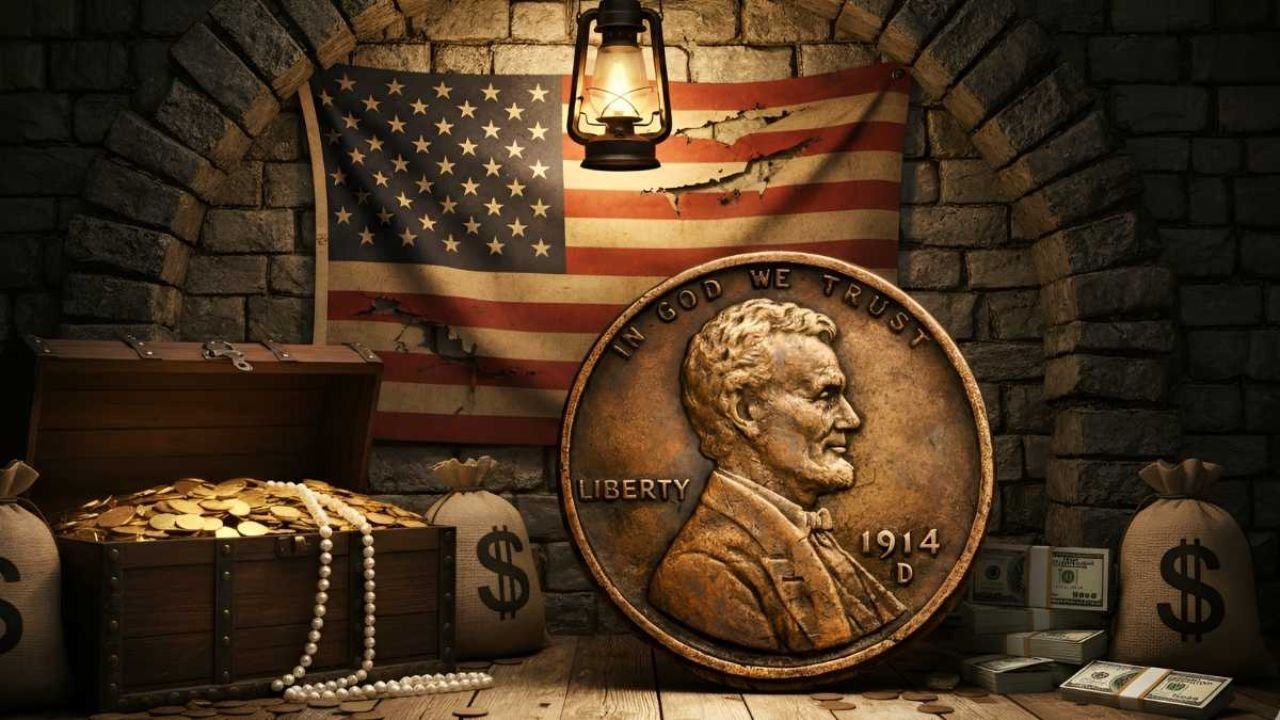
The Lincoln Wheat penny is one of the most iconic coins in American history. Minted from 1909 to 1958, these pennies were once common in circulation, yet certain rare varieties have become highly sought-after collectibles. In some remarkable cases, pennies found in everyday change have been valued at $50,000 or more. Understanding the history, rarity, and identifying features of Lincoln Wheat pennies is essential for collectors and casual finders alike.
Historical Background
Introduced in 1909 to commemorate the centennial of Abraham Lincoln’s birth, the Lincoln Wheat penny was designed by Victor David Brenner. The obverse features Lincoln’s portrait, while the reverse showcases two wheat stalks framing the words “ONE CENT.” For nearly five decades, these pennies circulated widely, becoming a familiar part of everyday life. Today, their historical significance, combined with rarity, makes certain Wheat pennies extremely valuable.
Key Dates and Rare Varieties
Not all Wheat pennies are valuable, but specific dates and mint marks stand out as treasures:
- 1909-S VDB Penny: One of the most famous rarities, with limited mintage and distinctive designer initials.
- 1914-D Penny: Scarce in high grades, forming a cornerstone of many collections.
- 1922 No D Penny: A Denver Mint coin struck without a mint mark, highly prized.
- 1931-S Penny: Low mintage and strong collector demand make it valuable.
- 1943 Copper Penny: A legendary error struck in copper instead of steel during World War II, worth tens of thousands.
- 1955 Double Die Penny: Known for dramatic doubling on the obverse, often valued in the thousands.
Coins in Mint State condition, certified by professional grading services, can easily reach values of $50,000 or more.
Why Certain Wheat Pennies Are Worth Thousands
Several factors contribute to a Lincoln Wheat penny’s extraordinary value:
- Low Mintage: Coins struck in smaller numbers are inherently rarer.
- Minting Errors: Doubled dies, missing mint marks, or off-center strikes create unique varieties.
- Condition: High-grade examples with minimal wear are far more valuable than circulated pennies.
- Collector Demand: Popular rarities attract intense interest, driving prices upward.
How to Spot Hidden Value
Even casual coin enthusiasts can look for signs of value in everyday change:
- Mint Marks: Located beneath the date, letters like “S” for San Francisco or “D” for Denver can dramatically increase value.
- Date: Key years such as 1909, 1914, 1922, 1931, 1943, and 1955 often contain the rarest examples.
- Errors: Doubling, missing marks, or unusual features may indicate a valuable coin.
- Condition: Sharp details and original luster increase worth exponentially.
Market Trends in 2026
The market for Lincoln Wheat pennies remains robust in 2026. Auctions regularly feature rare examples, with prices continuing to climb. High-grade, certified coins are especially coveted, combining historical appeal with investment potential. Collectors recognize that Wheat pennies not only carry nostalgia but can also deliver significant financial returns.
Collecting Tips
- Check Your Change: Rare pennies occasionally appear in circulation or old coin jars.
- Use Magnification: A jeweler’s loupe can help detect doubling, mint errors, or unusual details.
- Buy Certified Coins: Professional grading guarantees authenticity and condition.
- Preserve Carefully: Store coins in protective holders to prevent damage and maintain value.
- Stay Informed: Monitor auction results and market trends to understand current valuations.
Conclusion
The Lincoln Wheat penny is far more than a piece of small change. Certain rare varieties, including the 1909-S VDB, 1943 copper penny, and 1955 double die, can be worth $50,000 or more. These coins transform ordinary currency into hidden treasures, offering both financial reward and a tangible connection to America’s past. For collectors and casual finders alike, the thrill of discovering a rare Wheat penny proves that even the smallest coin can carry immense historical and monetary value.