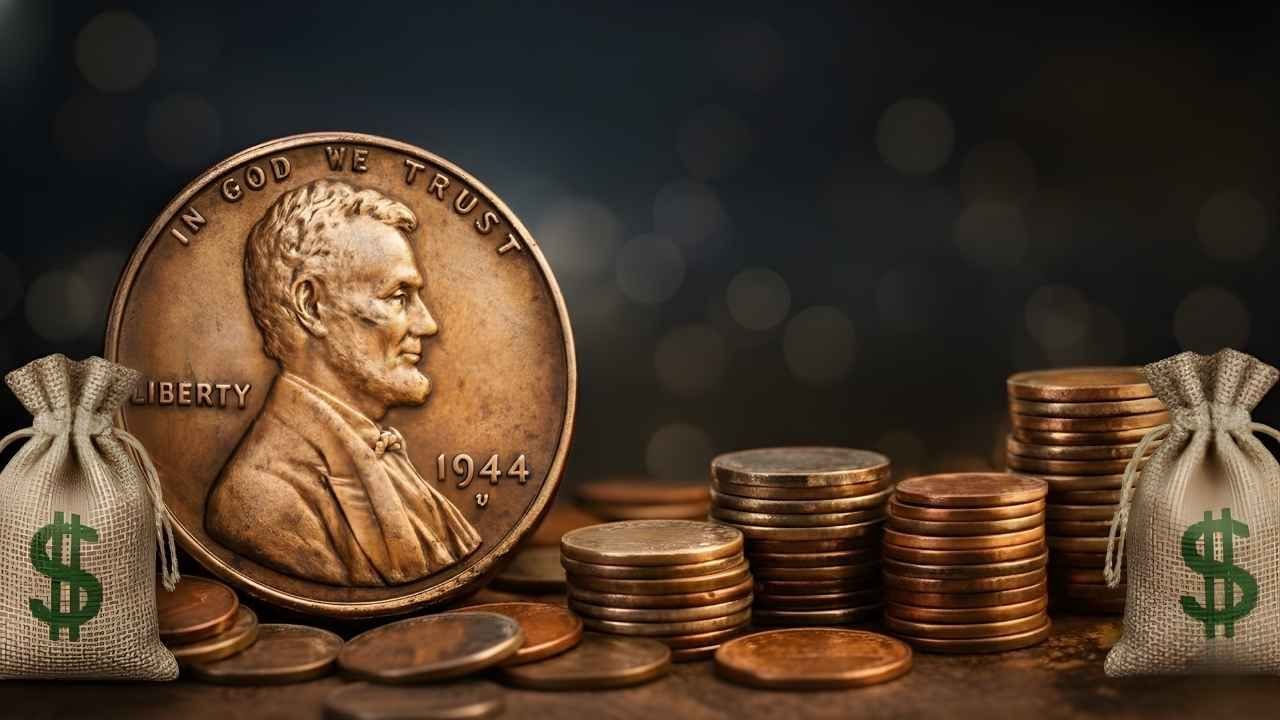
The Lincoln cent remains one of the most widely collected and historically significant coins in American numismatics. Introduced in 1909 to honor President Abraham Lincoln, it has circulated for more than a century, evolving through multiple design changes, metal compositions, and mint variations.
While most Lincoln Pennies are worth only face value, certain years, mint marks, and error varieties have transformed modest copper coins into high-value collectibles. As of 2026, demand for rare, certified examples remains strong, supported by global collectors and investors seeking tangible assets with historical credibility.
This comprehensive guide outlines key value drivers, mint mark distinctions, grading essentials, and a year-by-year value overview every serious collector should understand.
A Brief History of the Lincoln Penny
The Lincoln cent was designed by Victor David Brenner and released in 1909 to commemorate the centennial of Lincoln’s birth. It was the first U.S. coin to depict a real historical figure rather than a symbolic representation.
The design has evolved across three major eras:
- 1909–1958: Wheat reverse (two wheat stalks)
- 1959–2008: Lincoln Memorial reverse
- 2010–Present: Union Shield reverse
Each era introduced unique minting characteristics and collectible varieties that continue to shape market value today.
Understanding Mint Marks and Their Impact
Mint marks identify where a coin was produced. On Lincoln Pennies, they play a crucial role in determining rarity and value.
Primary Mint Marks
- P (Philadelphia): Historically no mint mark until 2017 circulation issues
- D (Denver): Regular circulation strikes
- S (San Francisco): Often proof coins or limited issues
In many cases, the mint mark alone can significantly affect price. For example, a common Philadelphia issue may be worth only a few cents, while a scarce San Francisco proof error could reach thousands.
General Mint Mark Value Overview (Common Issues)
- Philadelphia circulation strikes: $0.01 – $5
- Denver circulation strikes: $0.01 – $10
- San Francisco proofs: $5 – $50
- Rare San Francisco proof errors: $5,000+
Condition and rarity ultimately determine final value.
The Most Valuable Lincoln Penny Errors
Error coins represent some of the most exciting and profitable segments of the Lincoln cent series. A few iconic examples dominate collector interest.
1955 Double Die Obverse
One of the most dramatic doubling errors in U.S. coinage. Strong visible doubling in the date and inscriptions has pushed top-grade examples beyond $150,000.
1969-S Double Die Obverse
Extremely rare with bold doubling. Auction records have exceeded $450,000 for high-grade certified specimens.
1943 Copper Cent
During World War II, pennies were struck in steel to conserve copper. A few copper planchets were mistakenly used, creating one of the most famous mint errors in history. Premium examples have surpassed $250,000.
1922 No D
A die issue resulted in missing mint marks on certain Denver coins. Authentic high-grade examples can reach $75,000 or more.
These errors demonstrate how production anomalies, when paired with strong condition, can create extraordinary financial value.
Grading: The Key to Unlocking Value
Professional grading significantly influences pricing. Coins are evaluated on the Sheldon scale from 1 (Poor) to 70 (perfect Mint State).
General value progression by grade:
- VG-8 (Very Good): $5 – $50
- F-12 (Fine): $10 – $100
- VF-20 (Very Fine): $25 – $250
- EF-40 (Extremely Fine): $50 – $500
- AU-50 (About Uncirculated): $100 – $1,000
- MS-63 (Mint State): $250 – $5,000
- MS-65 (Gem Mint State): $500 – $10,000+
Rare varieties in MS-67 or higher can escalate into six-figure territory.
Third-party certification enhances authenticity, buyer confidence, and resale liquidity.
Lincoln Penny Value Chart 2026: Key Years & Mint Marks
Below is a focused overview of notable years that consistently attract collector interest.
1909 (VDB)
- Common range: $20 – $500
- 1909-S VDB: $1,000+ and significantly higher in Mint State
1914-D
- Circulated: $50 – $2,000
- High-grade examples: $10,000+
1922 No D
- Circulated: $500 – $5,000
- High-grade specimens: $75,000+
1943 Copper
- Extremely rare
- $50,000+ in lower grades
- $250,000+ for premium examples
1955 Double Die
- $10,000+ in strong condition
- $150,000+ in high Mint State
1969-S Double Die
- $50,000+
- $450,000+ in top certified grades
1972 Double Die
- $500 – $2,000 common examples
- $10,000+ for high-grade pieces
1982 Small Date Copper
- $50 – $500
- $5,000+ in top condition
2009 Bicentennial Designs
- $1 – $50 common
- Special varieties: $500+
Values fluctuate depending on condition, certification, and market demand.
2026 Market Trends
The Lincoln Penny market remains resilient in 2026, supported by several dynamics:
Growing Global Participation
Online auctions have expanded access to international buyers, increasing competition for rare certified coins.
Alternative Asset Interest
Investors increasingly view rare coins as portable stores of value with historical depth.
Focus on High-Grade Quality
Collectors are prioritizing superior preservation and verified rarity over volume-based collecting.
Modern varieties and classic Wheat Pennies both benefit from renewed interest among younger collectors entering the hobby.
Lincoln Penny vs. Other Modern Rarities
Lincoln cents frequently appear alongside other celebrated U.S. coin errors, including:
- The 1975 No S Roosevelt Dime
- The 2000 Sacagawea Dollar mule error
- The 1982 No Mint Mark Dime
Among these, the 1969-S Double Die Lincoln cent remains one of the most valuable modern-era copper coins ever sold.
Its combination of dramatic visual error and rarity reinforces the Lincoln Penny’s elite status in American numismatics.
Cultural and Historical Significance
The Lincoln cent has endured through world wars, economic crises, technological shifts, and the transition to digital payments. It remains one of the most familiar coins in circulation.
Its longevity, design evolution, and rare error stories have elevated it beyond currency — it is a cultural artifact that reflects more than a century of American history.
For many collectors, it represents the gateway into serious numismatics.
Final Thoughts
The Lincoln Penny Value Chart 2026 reveals a market shaped by rarity, condition, and historical context. While most cents remain everyday currency, select years and mint marks have achieved extraordinary financial significance.
From the legendary 1909-S VDB to the ultra-rare 1943 Copper and 1969-S Double Die, these coins prove that exceptional value can reside in the smallest denomination.
For collectors and investors alike, the Lincoln cent continues to offer opportunity, history, and the enduring appeal of tangible wealth in compact form.