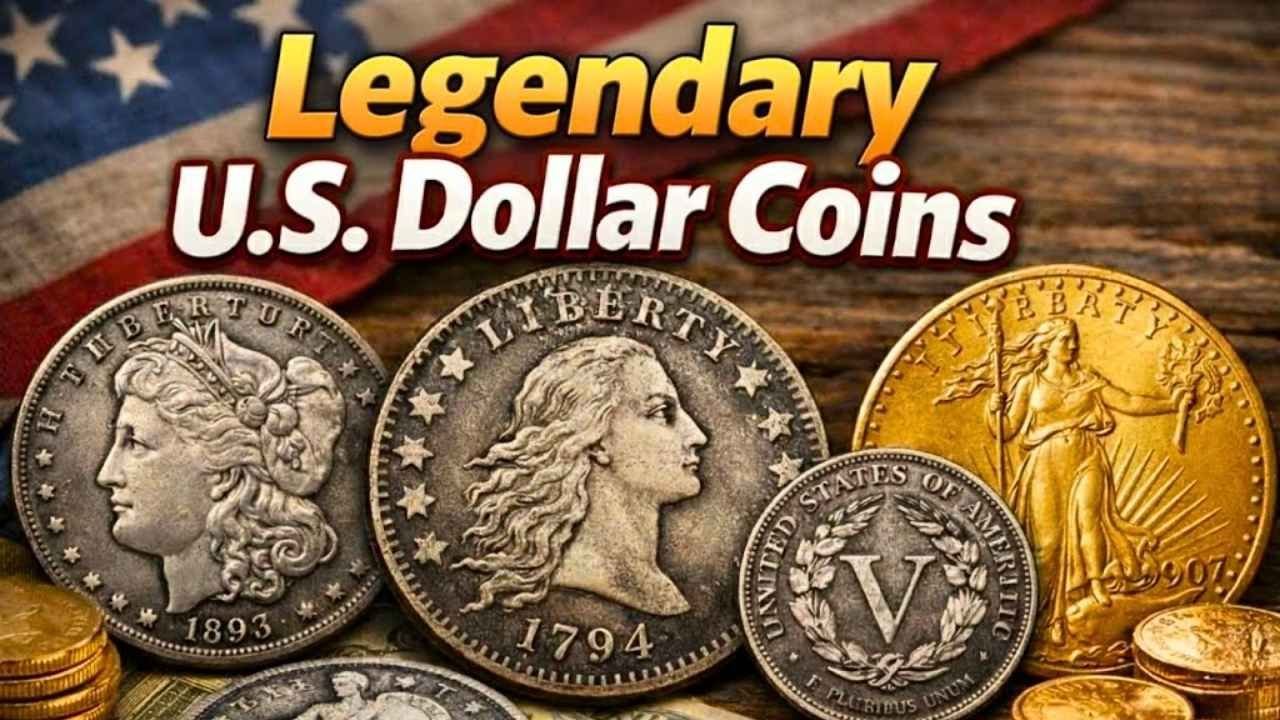
U.S. dollar coins occupy a powerful space in the world of collectibles. More than simple currency, they represent the economic ambition, artistry, and political identity of the United States. While millions were minted across centuries, only a select few have achieved legendary status—commanding prices that rival fine art and historic manuscripts.
In 2026, rare U.S. dollar coins continue to attract serious collectors and global investors seeking tangible assets with cultural depth and long-term value. This guide explores the most iconic rarities, why they command millions, and how condition and market trends shape their worth.
The Birth of the American Dollar Coin
The story begins in 1794 with the introduction of the 1794 Flowing Hair Dollar. As the first official silver dollar struck by the United States Mint, it symbolized the nation’s determination to establish a stable and independent monetary system.
Early designs evolved quickly. The Flowing Hair motif gave way to the Draped Bust design, followed by Seated Liberty imagery in the mid-19th century. Each transformation reflected shifting artistic standards and national priorities.
By the late 1800s, large silver dollars became enduring symbols of American commerce, particularly during westward expansion and industrial growth.
Why Some Dollar Coins Are Worth Millions
Not every historic coin commands a fortune. Ultra-rare dollar coins typically share three defining characteristics:
Extreme Rarity
Low mintage numbers or limited surviving populations dramatically increase value. Some legendary coins exist in quantities of fewer than 20 known examples.
Historical Significance
Coins associated with pivotal eras—such as early federal minting or international trade—carry heightened appeal. They embody turning points in economic history.
Exceptional Condition
Grade matters profoundly. Mint State or proof specimens with sharp strikes and minimal surface marks often sell for multiples of lower-grade examples. Preservation and originality directly influence record-breaking results.
When rarity, history, and condition align, values can reach eight figures.
Legendary Dollar Coin Rarities
Several U.S. dollar coins stand at the pinnacle of numismatics.
1794 Flowing Hair Dollar
Widely believed to represent the first silver dollar struck by the Mint, high-grade examples have sold for more than $10 million. Its historical importance and limited surviving population make it one of the most coveted coins in the world.
1804 Draped Bust Dollar
Known as the “King of American Coins,” the 1804 Draped Bust Dollar is surrounded by intrigue. Although dated 1804, most were actually struck decades later as diplomatic presentation pieces. Only a handful exist, and each appearance at auction generates global attention.
1885 Trade Dollar Proof
The 1885 Trade Dollar is among the rarest U.S. silver dollars. Produced in extremely limited numbers after the official series ended, it remains a prized treasure for advanced collectors.
Each of these coins represents a defining chapter in American monetary history.
Silver Dollar Icons: Morgan and Peace
Beyond ultra-rare specimens, certain series remain perennial favorites.
The Morgan Dollar, struck from 1878 to 1921, is one of the most widely collected silver dollars. Designed by George T. Morgan, it features Liberty in profile and a bold heraldic eagle. Key dates and high-grade examples command strong premiums.
The Peace Dollar followed, commemorating peace after World War I. Its Art Deco design and symbolic message resonate deeply with collectors. Scarce dates and top-condition coins continue to appreciate.
While more common than earlier rarities, select issues within these series can still achieve five- and six-figure prices.
Gold Dollar Coins: Compact and Powerful
Gold dollar coins, first introduced in 1849 during the California Gold Rush, reflect another fascinating chapter in U.S. history. Though small in size, they carry substantial historical weight.
Rare dates and well-preserved examples can reach impressive valuations, particularly for low-mintage issues. Their intrinsic gold content adds another dimension of value, blending collectible appeal with precious metal security.
Error Dollar Coins: Accidental Masterpieces
Minting errors create some of the most intriguing opportunities in coin collecting. Double strikes, off-center impressions, and planchet errors can transform ordinary coins into rare curiosities.
While most errors carry modest premiums, exceptional or visually dramatic examples sometimes achieve extraordinary results. Error coins offer insight into the minting process and add unpredictability to the market.
Collectors often prize them for their uniqueness—each one a tangible reminder of human craftsmanship.
Understanding Condition and Grading
Professional grading plays a central role in determining a coin’s market value. Coins are evaluated on strike quality, luster, surface preservation, and wear.
Grades range from heavily worn (Poor) to flawless Mint State. Proof coins, struck with specially polished dies, display mirror-like fields and sharp details, often commanding significant premiums.
Third-party authentication enhances buyer confidence and ensures market transparency. For rare dollar coins, even a single grade point difference can represent a substantial shift in price.
U.S. Dollar Coins Value Chart Overview
While exact prices fluctuate with market demand and condition, the following categories illustrate general value tiers in 2026:
- Elite Rarities (1794 Flowing Hair, 1804 Draped Bust): Multi-million-dollar range
- Ultra-Scarce Proof Issues (1885 Trade Dollar): Often seven figures
- High-Grade Morgan and Peace Key Dates: Thousands to six figures
- Gold Dollar Rarities: Thousands to high six figures depending on grade
- Common Circulated Silver Dollars: Primarily valued for silver content
Condition, provenance, and auction timing significantly influence final sale prices.
Market Trends in 2026
The rare coin market in 2026 reflects steady global demand for tangible, historically significant assets. High-net-worth collectors increasingly view elite coins as long-term wealth preservation tools.
Auction participation has expanded internationally, enhancing liquidity for premium pieces. Record-setting sales continue to reinforce confidence in top-tier rarities.
Silver and gold dollar coins also benefit from precious metal interest, adding a layer of financial security alongside collector appeal.
Collecting and Investment Strategy
For serious collectors and investors:
- Focus on authenticated, high-grade examples
- Study auction archives and population reports
- Prioritize rarity and historical importance
- Store coins in climate-controlled protective holders
- Diversify across multiple series for balance
Elite dollar coins often trade infrequently, so patience and preparation are essential.
Key Highlights
- First U.S. silver dollar introduced in 1794
- Legendary rarities include the 1794 Flowing Hair and 1804 Draped Bust Dollars
- 1885 Trade Dollar proof among the rarest U.S. coins
- Morgan and Peace Dollars remain highly collectible
- Gold dollar coins combine historical and intrinsic value
- Condition and professional grading significantly influence price
- Strong collector demand continues in 2026
Final Thoughts
Legendary U.S. dollar coins represent more than monetary instruments—they are enduring artifacts of American ambition, artistry, and resilience. From the earliest silver dollars of the 18th century to iconic 19th- and 20th-century issues, these coins tell the story of a nation in metal.
For collectors and investors seeking assets with both cultural significance and financial strength, rare U.S. dollar coins remain compelling. In 2026, their appeal is as powerful as ever—proof that history, scarcity, and craftsmanship can create treasures of extraordinary and lasting value.