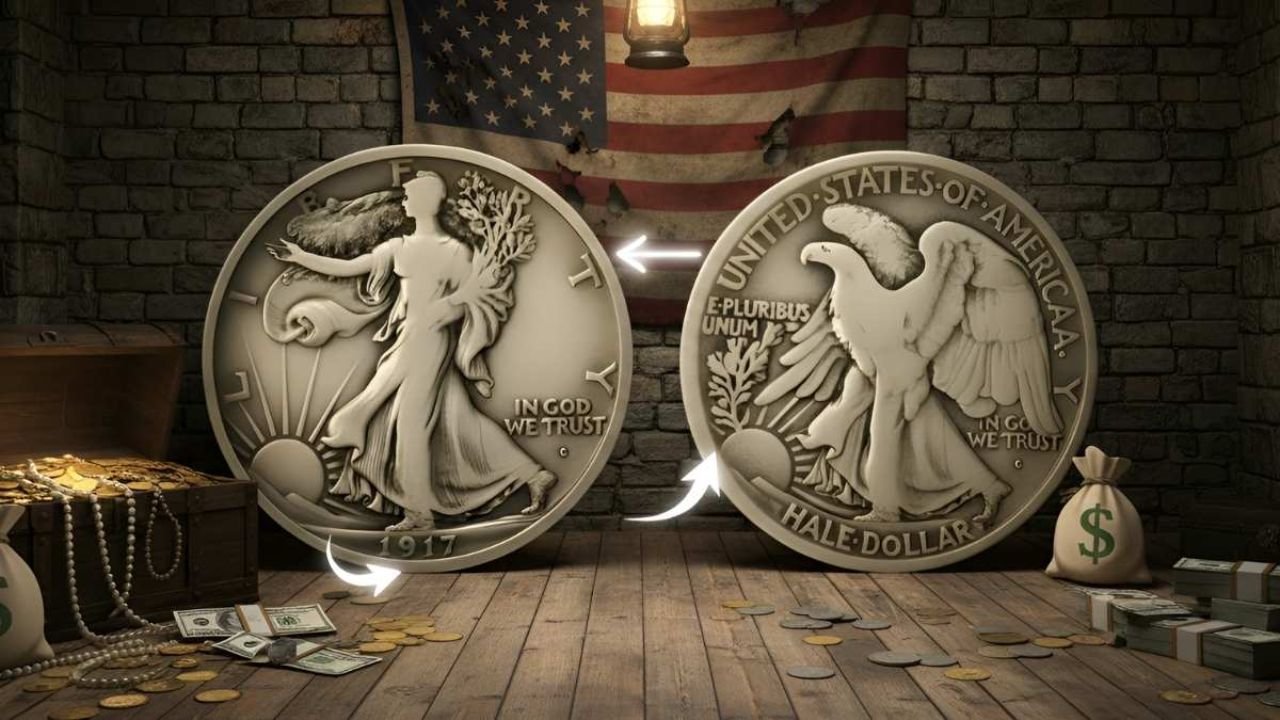
The 1917 Walking Liberty Half Dollar stands among the most admired coins in American numismatics. Celebrated for its artistry, silver content, and historic significance, the 1917 issue occupies a special place within the broader Walking Liberty series.
Struck during a pivotal period in U.S. history, this coin combines early 20th-century design excellence with intriguing mint varieties that continue to command strong collector demand in 2026. Whether you are a seasoned numismatist or a strategic investor in tangible assets, understanding the 1917 issue is essential.
A Design That Redefined American Coinage
The Walking Liberty Half Dollar series debuted in 1916 as part of a major artistic transformation of U.S. coin design. The coin was created by renowned sculptor Adolph A. Weinman, whose work brought a fresh sense of movement and symbolism to American currency.
The obverse features Lady Liberty striding confidently toward the rising sun, draped in the American flag and carrying branches of laurel and oak. The reverse displays a powerful eagle perched on a rock, wings partially unfolded — a symbol of national strength and resilience.
The design proved so enduring that it later inspired the American Silver Eagle bullion coin introduced decades later.
1917 Mint Production and Key Varieties
In 1917, Walking Liberty Half Dollars were struck at three mints:
- Philadelphia (no mint mark)
- Denver (D)
- San Francisco (S)
What makes the 1917 issue especially interesting is the existence of two distinct mint mark placements for the Denver and San Francisco coins.
Reverse Mint Mark (Early 1917)
Early in the year, mint marks were placed on the reverse beneath the eagle. These are generally more common than their obverse counterparts.
Obverse Mint Mark (Later 1917)
Later in 1917, the mint mark was moved to the obverse, beneath the date. The Denver and San Francisco obverse mint mark varieties are scarcer and significantly more valuable — particularly in higher grades.
For collectors building a complete set, acquiring both mint mark placements is considered essential.
1917 Walking Liberty Half Dollar Value by Condition
Condition is the single most important factor in determining value. Even minor differences in surface preservation, strike sharpness, and remaining luster can dramatically affect price.
Below are approximate market ranges for 2026:
Good to Very Good (G–VG)
Heavily worn coins with visible date and major design elements.
Estimated Value: $15 – $40
These are affordable entry-level examples primarily valued for silver content and historic appeal.
Fine to Very Fine (F–VF)
Moderate wear with clearer detail in Liberty’s gown and the eagle’s feathers.
Estimated Value: $40 – $120
These coins balance affordability with stronger visual appeal.
Extremely Fine (EF–XF)
Light wear with most details sharp and visible.
Estimated Value: $150 – $500
At this level, design definition becomes far more attractive to serious collectors.
About Uncirculated (AU)
Minimal wear with traces of original mint luster.
Estimated Value: $600 – $2,000
Scarcity increases noticeably, especially for obverse mint mark varieties.
Mint State (MS)
Uncirculated coins with no wear and strong luster.
Estimated Value: $3,000 – $175,000+
Top-graded obverse mint mark examples in superb Mint State condition can achieve extraordinary auction results. Population scarcity at the highest grades drives six-figure valuations.
Why Obverse Mint Mark Varieties Are More Valuable
The Denver and San Francisco obverse mint mark versions were produced for a shorter period in 1917. As a result, fewer survive — particularly in high grades.
Additionally, many early Walking Liberty halves were heavily circulated due to their substantial silver content and widespread use. Finding sharply struck, well-preserved obverse mint mark coins today is significantly more challenging.
For advanced collectors, these varieties represent cornerstone acquisitions.
Strike Quality and Eye Appeal
Walking Liberty halves are known for occasional weak strikes, particularly on Liberty’s hand and the eagle’s breast feathers.
Coins with:
- Full skirt lines
- Strong eagle feather detail
- Bright original luster
- Minimal contact marks
command higher premiums.
Eye appeal plays a crucial role in elite auctions, where collectors compete aggressively for standout examples.
Silver Content and Intrinsic Value
Each 1917 Walking Liberty Half Dollar contains 90% silver. While intrinsic metal value provides a price floor, numismatic value far exceeds melt value for most collectible examples.
This combination of precious metal backing and historical artistry enhances long-term investment appeal.
Market Demand in 2026
In 2026, early 20th-century silver coinage continues to attract both collectors and investors. The Walking Liberty series remains one of the most beloved U.S. coin designs, and the 1917 issue benefits from:
- First-era production status
- Multiple mint varieties
- Strong auction history
- Global collector recognition
High-grade examples, particularly certified coins, remain highly liquid within the premium rare coin market.
Collecting and Investment Tips
If you are considering adding a 1917 Walking Liberty Half Dollar to your collection:
Verify Mint Mark Placement
Obverse varieties are scarcer and more valuable.
Choose Certified Coins
Professional grading ensures authenticity and protects resale value.
Prioritize Eye Appeal
Strong strike and clean surfaces often outperform technically similar but less attractive coins.
Store Properly
Use protective holders and avoid environmental exposure to preserve condition.
Final Thoughts
The 1917 Walking Liberty Half Dollar represents a powerful blend of beauty, history, and investment potential. While circulated examples remain accessible, high-grade obverse mint mark varieties can achieve remarkable valuations.
More than a century after its release, the coin continues to captivate collectors worldwide. For those who appreciate artistry, silver heritage, and enduring value, the 1917 Walking Liberty Half Dollar remains a cornerstone of American numismatics — and a timeless asset within any serious collection.