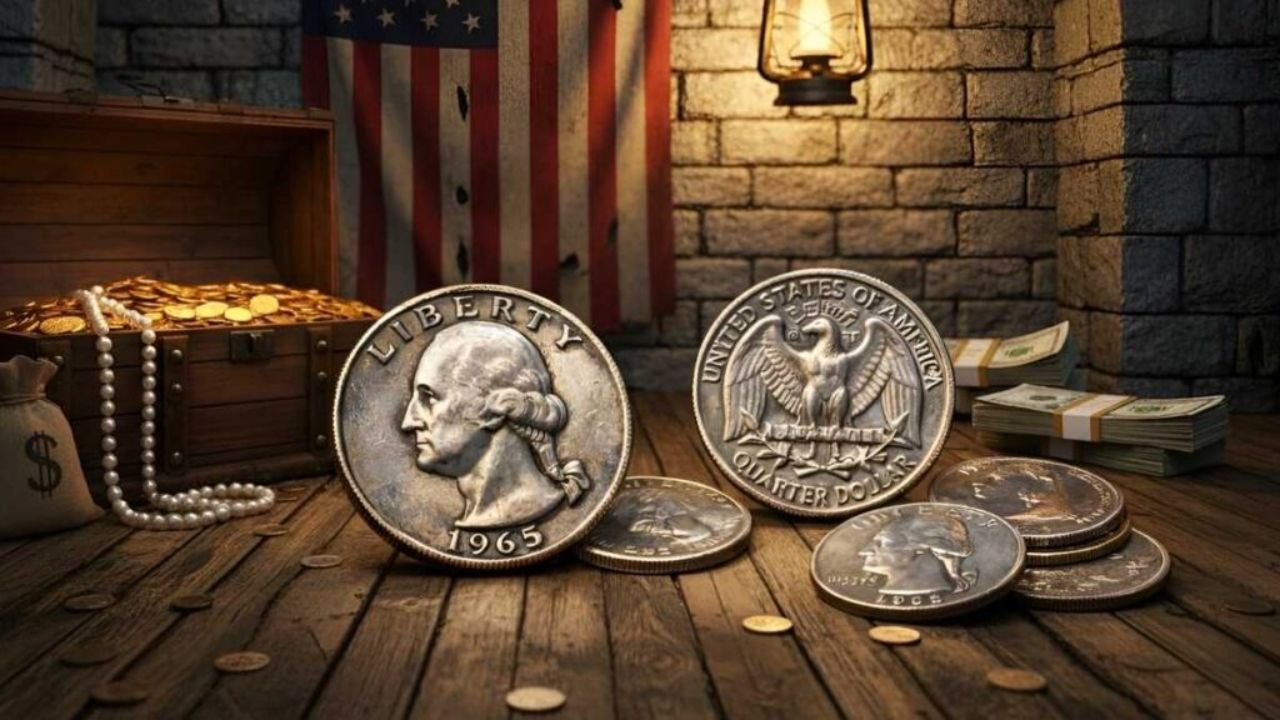
Quarters are among the most widely used coins in American history, yet a select few have evolved into high-value collectibles worth thousands of dollars. While most people view a quarter as spare change, seasoned collectors understand that rarity, condition, mint errors, and historical significance can transform a simple twenty-five cent coin into a premium asset.
Below are fourteen rare quarters that, collectively, can exceed $50,700 in value. Whether you are an experienced numismatist or an investor exploring tangible assets, these coins represent hidden opportunities in plain sight.
The 1932-D Washington Quarter
The 1932-D Washington Quarter marks the debut year of the Washington quarter series. Struck at the Denver Mint with a limited mintage of just 436,800 pieces, it remains one of the key dates in the entire collection.
High-grade examples, especially those certified in Mint State condition, regularly command several thousand dollars. Strong luster, sharp strike details, and minimal surface marks significantly increase value.
The 1932-S Washington Quarter
The 1932-S Washington Quarter is equally important. With a mintage of 408,000 coins, it is even scarcer than its Denver counterpart.
Collectors consider it essential for completing a Washington quarter set. In top condition, values can easily reach into the five-figure range, particularly for well-preserved specimens with original surfaces.
The 1943-S Silver Washington Quarter
The 1943-S Washington Quarter was struck during World War II using 90% silver. While not rare in circulated grades, Mint State examples are difficult to locate.
High-grade coins with strong eye appeal and minimal abrasions can fetch significant premiums, especially when professionally graded.
The 1950-D/S Overmintmark Quarter
Mint errors add intrigue and value. The 1950-D/S Washington Quarter features a Denver mintmark stamped over a San Francisco mintmark.
This overmintmark variety is highly collectible. Depending on condition, it can sell for hundreds to several thousand dollars, particularly in uncirculated grades.
The 1964-D Washington Quarter (Silver Variety)
The 1964-D Washington Quarter holds special significance as 1964 was the final year quarters were struck in 90% silver for circulation.
While common in lower grades, certain die varieties and high-grade examples stand out. Coins with exceptional preservation can bring impressive returns.
The 1970-S Proof Quarter Struck on Silver Planchet
One of the most fascinating mint errors involves the 1970-S Proof Washington Quarter.
A small number were mistakenly struck on leftover silver planchets intended for earlier coinage. These rare proof errors are highly sought after and can command thousands at auction.
The 1976 Bicentennial Silver Quarter
The 1976 Bicentennial Quarter was issued to celebrate America’s 200th anniversary.
While standard clad versions are common, the 40% silver collector editions—particularly in pristine proof condition—carry higher value. Certified high-grade examples remain desirable among investors and collectors alike.
The 1982 Washington Quarter Without Mint Mark
In 1982, some Philadelphia quarters were released without a mintmark due to production oversight. The 1982 Washington Quarter has since become a recognized collectible variety.
Well-preserved examples can sell for strong premiums, especially when authenticated and graded.
The 1983 Washington Quarter in Mint State
The 1983 Washington Quarter is not rare in general circulation, but it is surprisingly scarce in Mint State condition.
Because relatively few were saved at the time of issue, high-grade specimens certified MS65 or higher can command impressive prices.
The 1999-P Delaware “Spitting Horse” Quarter
Part of the State Quarters program, the 1999-P Delaware State Quarter features a die crack extending from the horse’s mouth, creating the illusion that it is “spitting.”
This popular modern error attracts strong collector interest, with top-condition examples achieving notable auction results.
The 2004-D Wisconsin Extra Leaf Quarter
Among modern mint errors, the 2004-D Wisconsin State Quarter is legendary.
Two varieties exist: the High Leaf and the Low Leaf. Both are scarce and highly collectible. In premium condition, these coins can be worth thousands.
The 2005 Minnesota Extra Tree Quarter
The 2005-P Minnesota State Quarter displays a doubled die effect that appears as an additional tree in the design.
Collectors appreciate its visual uniqueness, and certified examples continue to perform well in the marketplace.
The 2009-D District of Columbia Duke Ellington Quarter Error
The 2009-D District of Columbia Quarter honors jazz legend Duke Ellington. Certain striking errors and doubled dies have made select examples more valuable.
High-grade error coins are especially attractive to modern error specialists.
The 2010-P Hot Springs Quarter Error
From the America the Beautiful series, the 2010-P Hot Springs Quarter has surfaced with various die errors and striking anomalies.
While not widely known, premium-quality examples with clear errors can reach several hundred dollars or more.
Why Condition and Certification Matter
In rare coin markets, condition is everything. A circulated coin may be worth modestly more than face value, while a Mint State example of the same coin can command exponential premiums.
Professional grading services authenticate coins, assign condition grades, and encapsulate them for protection. For investors, certified coins provide added security and liquidity in the resale market.
Final Thoughts
Rare quarters demonstrate how everyday currency can evolve into premium collectibles. From early 1930s key dates to modern state quarter errors, these fourteen coins together can exceed $50,700 in potential value.
For those willing to study mintages, learn grading standards, and inspect pocket change carefully, the opportunity remains real. In a world increasingly focused on digital assets, tangible collectibles like rare quarters continue to offer historical depth, financial upside, and enduring appeal.