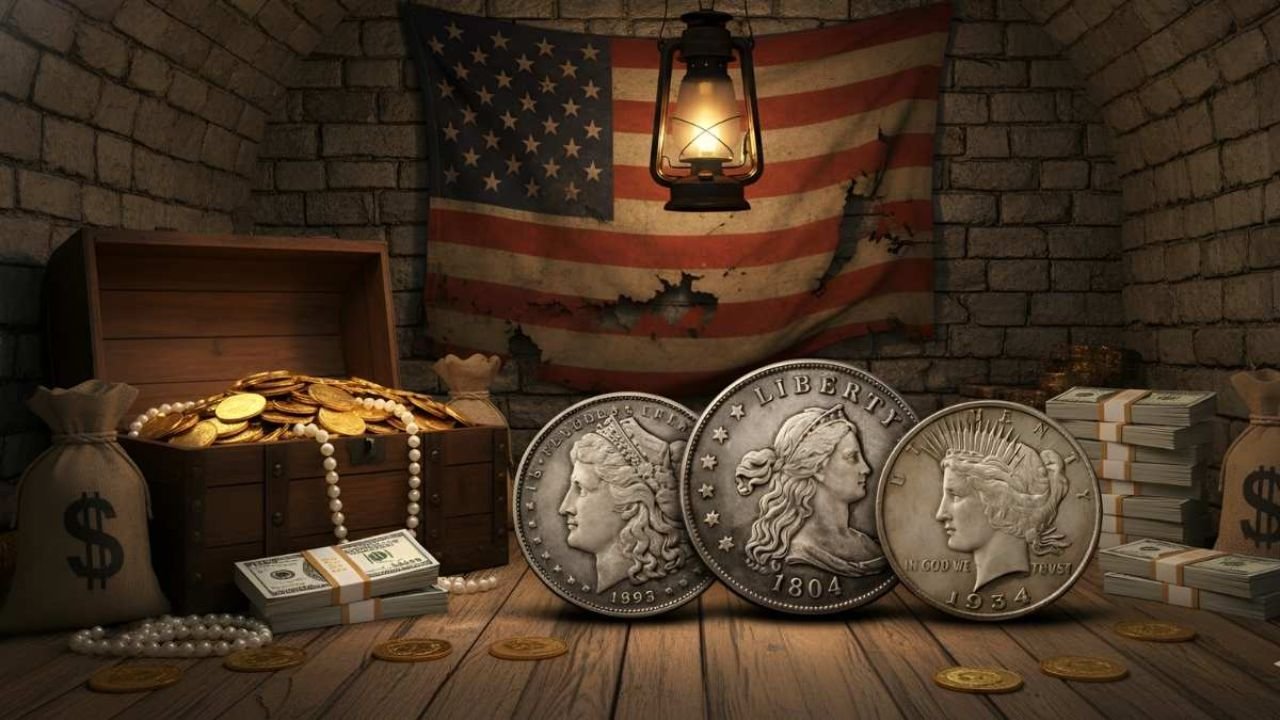
Collecting rare U.S. dollar coins has evolved into one of the most sophisticated and rewarding areas of modern numismatics. Beyond their face value, these coins represent pivotal chapters in American history, artistic craftsmanship, and long-term financial potential. For discerning collectors and investors alike, understanding rarity, minting errors, and market dynamics is the key to building a truly exceptional portfolio.
In today’s premium collectibles market, rare dollar coins are not just historical artifacts — they are tangible assets.
The Historical Legacy of U.S. Dollar Coins
The story of U.S. dollar coins begins in 1794 with the legendary Flowing Hair dollar, one of the earliest silver dollars struck by the United States Mint. These early coins symbolized a young nation establishing its economic independence.
Throughout the 19th and 20th centuries, dollar coins evolved in design and cultural significance. The Draped Bust dollar reflected neoclassical artistry, while the Morgan dollar became an icon of America’s westward expansion and industrial strength.
Later designs such as the Eisenhower dollar and the Sacagawea dollar connected modern collectors to pivotal moments in American leadership and exploration.
Each series tells a story — and rarity transforms that story into value.
The Most Valuable Dollar Coins Ever Sold
Certain U.S. dollar coins have achieved near-mythical status among collectors.
The 1804 Draped Bust Dollar
Often called the “King of American Coins,” the 1804 Draped Bust dollar is among the rarest and most coveted coins in existence. Though dated 1804, most examples were struck decades later for diplomatic presentation sets. With only 15 known specimens, auction prices have reached into the millions.
The 1794 Flowing Hair Dollar
The 1794 Flowing Hair dollar is widely believed to be the first silver dollar ever issued by the United States. A pristine specimen famously sold for over $10 million, setting records and reinforcing its elite status in the global collectibles market.
The 1889-CC Morgan Dollar
Minted in Carson City, Nevada, the 1889-CC Morgan dollar is prized for its low mintage and frontier-era heritage. High-grade examples are exceptionally scarce, commanding five- and six-figure prices at auction.
Hidden Mint Errors That Multiply Value
For sophisticated collectors, mint errors offer some of the most exciting opportunities in the market. A seemingly ordinary coin can transform into a rare prize due to a striking anomaly.
Double Die Errors
Double die coins feature noticeable doubling in inscriptions or design elements. These are the result of misaligned dies during the minting process and are highly sought after for their distinct appearance.
Off-Center Strikes
Coins struck off-center display incomplete or shifted designs. The more dramatic the misalignment — while still retaining visible date and mint mark — the higher the premium.
Mule Errors
One of the most famous modern error coins is the Sacagawea dollar mule error. In this rare mistake, a Sacagawea dollar was struck with the obverse die of a state quarter. Only a small number were produced before the error was discovered, making it one of the most valuable modern U.S. minting anomalies.
Planchet and Composition Errors
Occasionally, coins are struck on incorrect planchets (metal blanks), creating unusual weight or coloration differences. These production mistakes can dramatically increase market value when authenticated.
How to Identify a High-Value Dollar Coin
Building a valuable collection requires precision and patience. Key factors include:
1. Date and Mint Mark
Certain mints — particularly Carson City (CC) and New Orleans (O) — produced lower mintages in specific years. These mint marks can significantly affect value.
2. Condition and Preservation
Condition is everything. Coins graded Mint State (MS) 65 or higher can command exponentially higher prices than circulated examples. Surface luster, strike sharpness, and absence of blemishes all influence grade.
3. Rarity and Demand
True value emerges where rarity intersects with sustained collector demand. Some coins may have moderate mintages but very low survival rates in high grades.
The Importance of Professional Grading
Authentication and grading are essential in today’s premium coin market. Independent grading services evaluate coins using a standardized scale, ensuring transparency for buyers and sellers.
A coin certified in high Mint State condition often becomes significantly more liquid and investment-grade. Encapsulation also protects the coin from environmental damage, preserving long-term value.
For serious collectors, professionally graded coins offer both security and portfolio credibility.
Market Trends and Investment Potential
The rare coin market has shown consistent strength, particularly for historically significant U.S. dollar coins. High-profile auction results continue to attract global investors seeking alternative tangible assets.
Unlike volatile digital investments, rare coins combine historical permanence with scarcity-driven appreciation. As elite specimens disappear into long-term collections, available supply tightens — often strengthening prices over time.
While not immune to market cycles, top-tier rarities have demonstrated resilience across decades.
Smart Strategies for New Collectors
Entering the rare coin market does not require immediate high capital investment. Strategic steps include:
- Start with well-documented series like Morgan or Eisenhower dollars.
- Study mint reports and auction archives.
- Invest in magnification tools to detect errors.
- Purchase from reputable dealers or certified auctions.
- Focus on quality over quantity.
Education is the most powerful asset in numismatics.
Preservation: Protecting Long-Term Value
Proper storage safeguards both beauty and worth. Coins should be housed in archival-quality holders, stored in climate-controlled environments, and handled only with gloves to prevent surface contamination.
Direct sunlight, humidity, and improper cleaning can permanently damage a coin’s surface — dramatically reducing value. In rare coin collecting, preservation is wealth protection.
Final Thoughts
Rare U.S. dollar coins represent more than collectibles — they are enduring symbols of craftsmanship, national heritage, and strategic investment potential. From the historic 1794 Flowing Hair dollar to modern mint error discoveries, the opportunity to uncover extraordinary value remains alive for informed collectors.
In a world increasingly driven by digital assets, tangible history still holds undeniable power. With careful study, disciplined acquisition, and a long-term mindset, rare U.S. dollar coins can become both a passion and a legacy asset — a refined intersection of art, history, and financial intelligence.