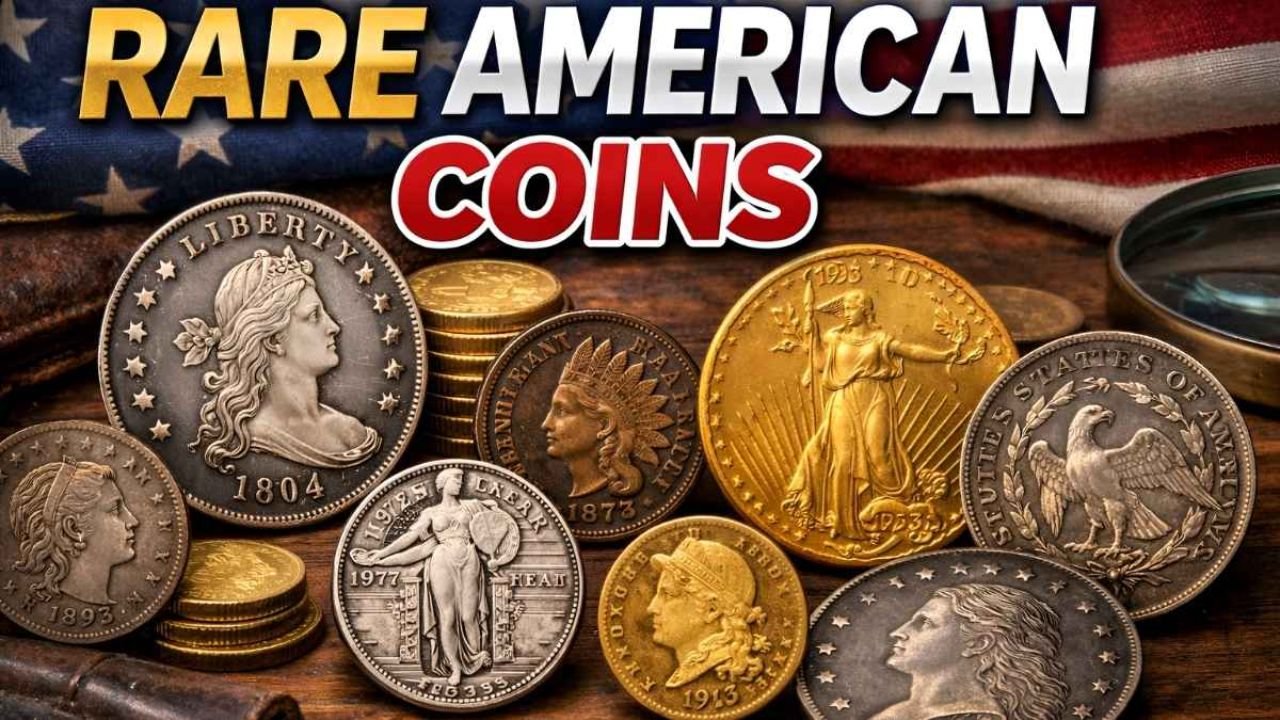
In 2026, rare American coins sit at the intersection of history, prestige, and serious capital. What began centuries ago as circulating currency has evolved into a global asset class attracting collectors, institutions, and high-net-worth investors. At the very top of the market, a select group of ultra-rare coins command valuations exceeding $25 million, transforming small pieces of metal into museum-grade financial trophies.
These coins are not simply rare. They are cultural landmarks—objects that define pivotal moments in American monetary history.
Why Certain Coins Reach Eight Figures
The rarest American coins derive their extraordinary value from a combination of scarcity, provenance, historical importance, and condition. In many cases, fewer than five to fifteen examples exist. When elite rarity meets pristine preservation and documented ownership history, demand intensifies dramatically.
Auction competition at this level is global. Buyers include private collectors, investment funds, and institutions seeking tangible assets with long-term appreciation potential.
The 1794 Flowing Hair Silver Dollar
The 1794 Flowing Hair Silver Dollar represents the birth of federal silver coinage in the United States. Believed by many experts to be among the first silver dollars ever struck by the U.S. Mint, it symbolizes the young nation’s economic independence.
Only a limited number survive today, and high-grade specimens are exceptionally rare. One example famously surpassed $10 million at auction, and in elite condition, valuations continue to climb. For advanced collectors, it is considered a foundational American coin.
The 1933 Double Eagle
Few coins carry the intrigue and legal drama of the 1933 Double Eagle. Although more than 400,000 were minted, none were officially released into circulation due to President Franklin D. Roosevelt’s gold recall policies during the Great Depression.
Most were melted down. A small number survived through extraordinary circumstances, sparking decades of legal battles over ownership rights. When one example sold for over $20 million, it set a benchmark for the rare coin market. In 2026, it remains one of the most valuable coins ever sold.
The 1804 Draped Bust Dollar
Often called the “King of American Coins,” the 1804 Draped Bust Dollar is legendary. Interestingly, most examples were not struck in 1804 but decades later as diplomatic presentation pieces.
Only 15 known specimens exist across three classifications. Each appearance at auction generates global attention. With multimillion-dollar valuations and deep historical mystique, the 1804 dollar represents the pinnacle of early American numismatics.
The 1913 Liberty Head Nickel
The 1913 Liberty Head Nickel stands as one of the most famous unauthorized issues in U.S. history. Only five examples are known, and their origins remain partially mysterious.
Over the decades, these nickels have appeared in museum exhibitions, private collections, and major auctions. Their extreme rarity and compelling backstory consistently drive values into the multi-million-dollar range.
The 1943 Copper Lincoln Cent
During World War II, pennies were produced in steel to conserve copper for military manufacturing. However, a few copper planchets were mistakenly used, creating the rare 1943 Copper Lincoln Cent.
Although far more attainable than the coins listed above, pristine examples have sold for hundreds of thousands—and in exceptional cases, over $1 million. It remains one of the most famous mint errors in American coinage.
Condition: The Multiplier Effect
Condition is a critical value driver. A rare coin in average circulated condition may command a fraction of the price of the same coin graded Mint State.
Professional grading services authenticate, encapsulate, and assign standardized grades on a 1–70 scale. At the highest tier of rarity, a single grade point difference can represent millions of dollars in market value.
Eye appeal, luster, strike sharpness, and surface preservation all contribute to final valuation. For elite investors, certification is non-negotiable.
Provenance and Prestige
At the ultra-high end of the coin market, provenance—the documented ownership history—can significantly enhance value. Coins once owned by renowned collectors or featured in historic collections often attract stronger bidding.
Prestige matters. When a coin becomes part of numismatic lore, it transcends metal content and transforms into a cultural artifact.
Market Outlook in 2026
The rare coin market remains resilient in 2026, supported by several macro trends:
- Increased interest in tangible alternative assets
- Global wealth expansion
- Strong performance of rare collectibles as portfolio diversifiers
- Transparent auction records providing pricing confidence
Top-tier American rarities benefit from deep liquidity relative to many collectible categories. When exceptional coins surface, competition is fierce.
While not every rare coin is worth millions, the upper echelon continues to set record prices, reinforcing long-term investor confidence.
Can Everyday Collectors Participate?
While eight-figure coins are beyond the reach of most collectors, the broader rare coin market offers accessible entry points. Key-date coins, certified error varieties, and high-grade examples of classic series provide meaningful appreciation potential.
Knowledge remains the greatest advantage. Understanding mintages, identifying varieties, and learning grading fundamentals can help collectors recognize opportunity where others see only face value.
Smart Acquisition Strategies
For serious collectors and investors, strategy matters.
Focus on Proven Rarity
Prioritize coins with established demand and historical importance. True scarcity sustains long-term value.
Buy the Best You Can Afford
High-quality examples outperform lower-grade coins over time.
Authenticate Every Major Purchase
Certification protects capital and ensures liquidity when selling.
Think Long Term
Rare coins reward patience. Short-term speculation rarely matches the performance of disciplined, strategic collecting.
Final Perspective
Rare American coins in 2026 represent far more than collectible currency. They are financial instruments, historical artifacts, and symbols of national heritage. From the 1794 silver dollar to the 1933 Double Eagle, these coins command valuations exceeding $25 million because they embody irreplaceable history combined with extraordinary scarcity.
For those with the expertise and resources to compete at the highest level, rare coins offer a unique blend of prestige, passion, and portfolio strength.
And even for those who simply admire them, they remain enduring reminders that history—sometimes quite literally—can be held in the palm of your hand.