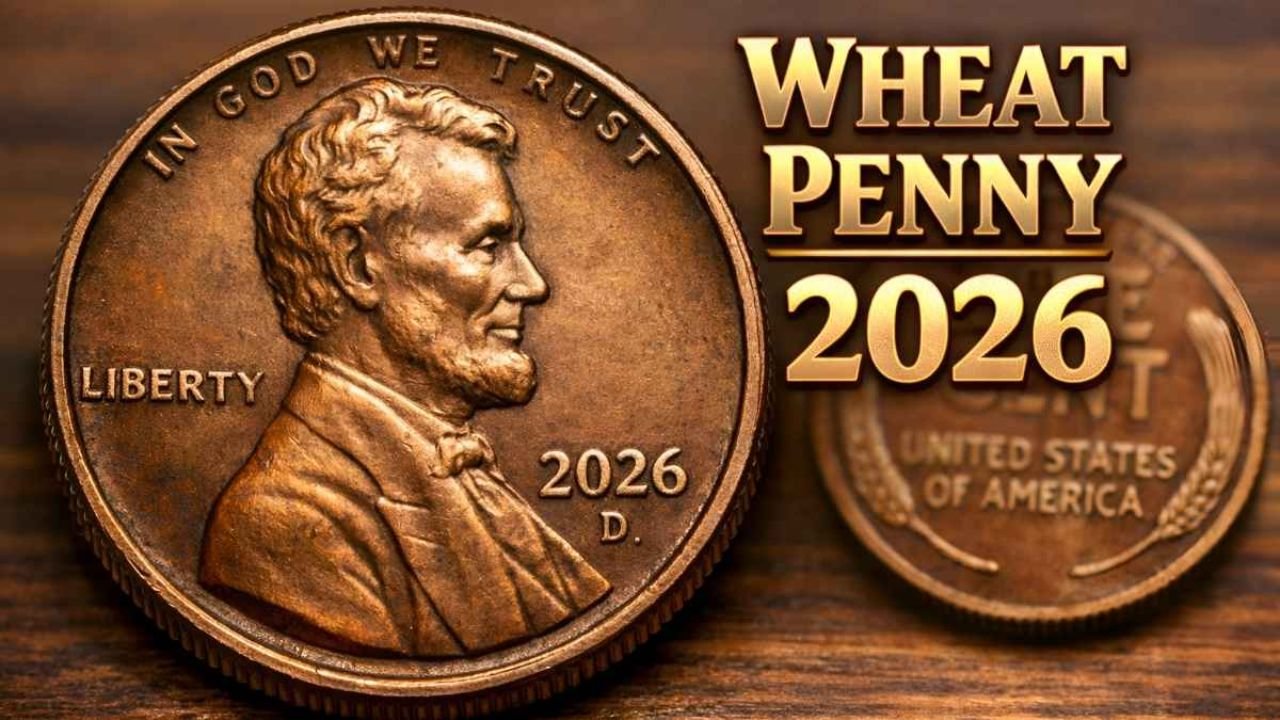
The Wheat Penny remains one of the most respected and actively traded coins in American numismatics. Officially known as the Lincoln Wheat Cent, it was minted from 1909 to 1958 and continues to command serious attention in 2026. While most examples are worth only modest premiums, certain rare dates and mint errors have crossed the $100,000 mark at major auctions.
For collectors and investors alike, Wheat Pennies offer a rare combination of history, scarcity, and long-term value growth. This guide explores the key dates, high-value errors, grading factors, and market trends shaping prices in 2026.
A Historic American Coin
The Wheat Penny was introduced in 1909 to commemorate the 100th anniversary of Abraham Lincoln’s birth. It was the first circulating U.S. coin to feature a real historical figure rather than a symbolic image. The obverse portrait was designed by Victor David Brenner, while the reverse displayed two stylized wheat stalks framing the denomination.
Minted during transformative periods in American history — including World War I, the Great Depression, and World War II — the coin carries cultural and historical significance far beyond its one-cent face value.
Today, that legacy fuels collector demand worldwide.
Rare Dates That Command Over $100,000
Not all Wheat Pennies are created equal. While billions were produced, a handful of key dates and varieties remain exceptionally scarce — especially in high grades.
1909-S VDB
Often considered the crown jewel of the series, the 1909-S VDB Lincoln Cent was minted in San Francisco with a limited production of just 484,000 coins. The inclusion of Brenner’s initials (“VDB”) on the reverse sparked controversy, and the design was quickly modified.
High-grade Mint State examples regularly exceed six figures at auction.
1914-D
The 1914-D Lincoln Cent is another elite rarity. With low mintage and heavy circulation, surviving examples in strong condition are scarce. Mint State coins have surpassed $100,000, especially those with sharp strike and original red luster.
1922 No D
Produced in Denver during a year of die deterioration, the 1922 No D Lincoln Cent lacks the “D” mint mark. This accidental omission created one of the most famous varieties in U.S. coinage. Well-preserved examples can command five- to six-figure prices.
1931-S
Although not as rare as earlier key dates, the 1931-S Lincoln Cent had a relatively low mintage during the Great Depression. High-grade examples remain in strong demand and can bring substantial premiums.
1943 Copper Penny
The legendary 1943 Copper Lincoln Cent is among the most famous error coins in American history. During World War II, pennies were struck in zinc-coated steel to conserve copper for the war effort. A small number were accidentally struck on leftover copper planchets.
Authenticated examples have sold for well over $100,000 — with some surpassing $1 million depending on condition and provenance.
The Power of Mint Errors
Error coins add another dimension to Wheat Penny collecting. Some errors are minor curiosities, while others transform ordinary coins into extraordinary assets.
The most famous example is the 1955 Doubled Die Lincoln Cent, known for its dramatic doubling of the date and lettering on the obverse. Even circulated examples carry significant value, while high-grade specimens can exceed six figures.
Other notable errors include:
- Off-center strikes
- Repunched mint marks
- Die cracks and cuds
- Lamination errors
Collectors in 2026 continue to scrutinize rolls and inherited collections, knowing that overlooked varieties still surface.
Condition: The Ultimate Value Driver
Condition is everything in numismatics. Wheat Pennies are graded on a scale from 1 to 70, with Mint State (MS) coins representing examples that show no signs of circulation.
A coin graded MS-65 with original red color may be worth several times more than the same date in brown, circulated condition. Subtle details — such as strike sharpness, surface preservation, and luster — dramatically impact market value.
Professional grading services play a critical role in authenticating rare dates and errors. Certification not only protects buyers and sellers but also enhances liquidity and resale potential.
Market Trends in 2026
The rare coin market remains resilient in 2026. As global investors diversify into tangible assets, high-quality rare coins continue to perform strongly. Wheat Pennies benefit from:
- A large and active collector base
- Transparent auction records
- Established price guides
- Long historical appreciation trends
Elite-condition coins and rare varieties are especially sought after. Auction houses report steady competition for top-tier examples, particularly coins with strong eye appeal and documented provenance.
While common-date Wheat Pennies remain affordable, true rarities are increasingly viewed as premium collectible assets rather than simple hobby pieces.
Can You Still Find One?
One of the most compelling aspects of Wheat Pennies is accessibility. Unlike many rare coins that were always expensive, Wheat Pennies once circulated widely. They still appear in estate collections, forgotten coin jars, and old bank rolls.
Though the odds of finding a six-figure rarity are slim, discoveries do happen. Knowledge is the collector’s greatest advantage.
Careful examination of dates, mint marks, and anomalies can reveal hidden value where others see only a penny.
Smart Collecting Strategies
Building a valuable Wheat Penny collection requires discipline and research. Consider these principles:
Prioritize Quality
Buy the best condition you can afford. Premium examples hold value more consistently over time.
Study Key Dates
Understand which years and mint marks carry real scarcity. Not every old penny is rare.
Authenticate Major Purchases
High-value coins should always be certified by reputable grading services.
Preserve Properly
Store coins in climate-controlled environments using archival-quality holders. Environmental damage can erase thousands in value.
Follow the Market
Track auction results and dealer listings to stay aligned with current pricing trends.
Final Thoughts
The Wheat Penny remains a cornerstone of serious coin collecting. More than a century after its introduction, it continues to reward expertise, patience, and careful selection.
In 2026, rare dates and major error varieties can command well over $100,000, reinforcing the coin’s status as both a historical artifact and a high-end collectible asset.
For collectors who value heritage, craftsmanship, and tangible wealth preservation, the Wheat Penny offers enduring appeal — and the possibility, however rare, of discovering extraordinary value in the most modest denomination.