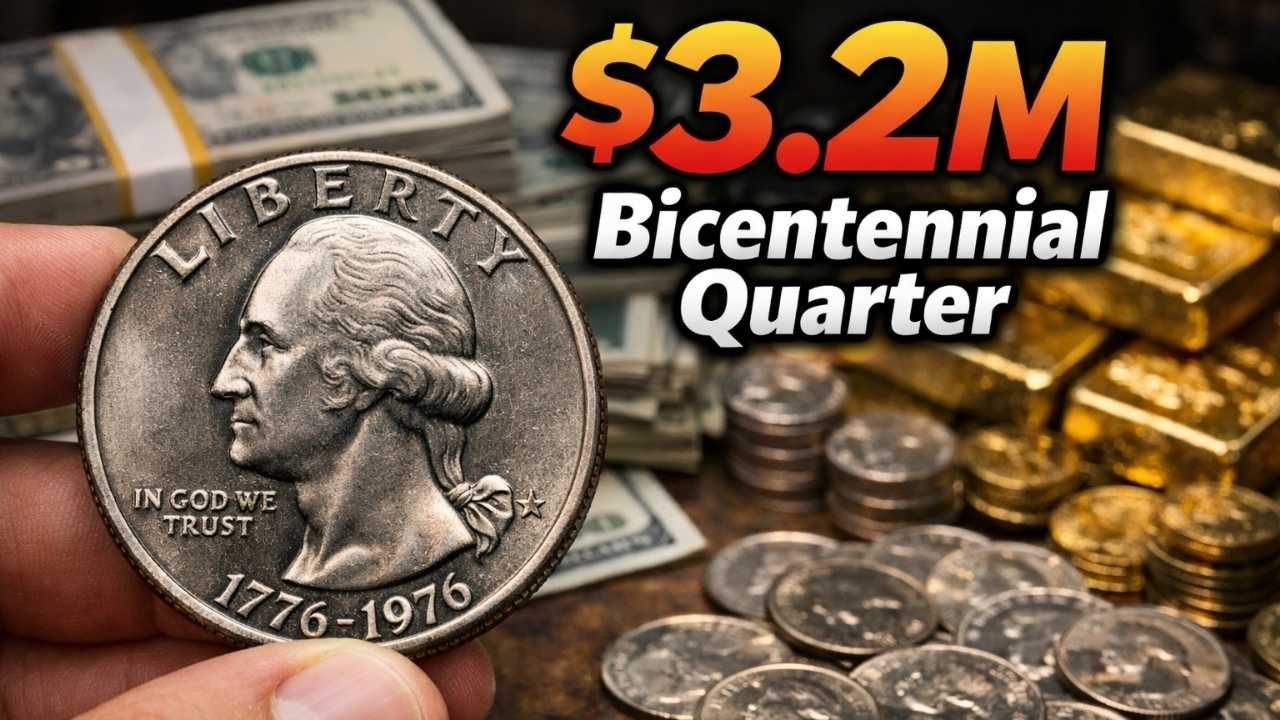
Few modern U.S. coins capture public imagination quite like the Bicentennial Quarter. Instantly recognizable by its dual date “1776–1976” and colonial drummer reverse, this commemorative issue celebrates America’s 200th anniversary.
While hundreds of millions were produced, rare error varieties and exceptional specimens have elevated select coins into high-value territory. Stories of a $3.2 million Bicentennial Quarter have fueled global curiosity. But what is myth, and what is market reality?
This guide explores the true drivers of value, the rare errors collectors seek, and how to determine whether your quarter is ordinary—or extraordinary.
Why the Bicentennial Quarter Stands Apart
The Bicentennial Quarter was minted in 1975 and 1976, though all carry the dual date 1776–1976. Unlike standard Washington quarters, the reverse features a Revolutionary War drummer designed by Jack L. Ahr, framed by thirteen stars representing the original colonies.
The coin was struck in two primary compositions:
- Copper-nickel clad for general circulation
- 40% silver-clad versions for collector sets
Its distinctive design and patriotic symbolism make it one of the most widely collected modern U.S. coins.
The $3.2 Million Question: Hype vs. High-End Reality
Headlines claiming multi-million-dollar Bicentennial Quarters often circulate online. The vast majority of these coins remain worth 25 cents, or slightly more if in pristine uncirculated condition.
However, under extremely rare circumstances—such as a unique minting error combined with flawless preservation and verified authenticity—a specimen could command an extraordinary price at auction.
A theoretical $3.2 million valuation would likely involve:
- A one-of-a-kind mint error
- Exceptional Mint State (MS-68 or higher) grading
- Provenance tied to a significant collection
- Verified rarity through professional certification
These conditions are exceedingly rare. Investors should approach sensational figures with disciplined scrutiny.
Understanding Mint Errors That Drive Value
Mint errors occur when something goes wrong during the striking process. Because these mistakes are unintended and often scarce, collectors place premiums on them.
Below are the most notable Bicentennial Quarter error types.
Double Strike
A coin struck twice by the dies, resulting in overlapping imagery. Dramatic examples can command $500 to $5,000 or more, depending on clarity and condition.
Off-Center Strike
When the coin blank is misaligned during striking, part of the design appears missing. Strong off-center examples can range from $200 to $2,000.
Wrong Planchet Error
A quarter struck on a blank intended for another denomination—or even a foreign coin—creates a highly collectible anomaly. These errors can exceed $10,000 in premium cases.
Clipped Planchet
A curved section of the coin is missing due to improper blank cutting. Values generally range from $100 to $1,500.
Die Cracks and Cuds
Raised lines or blobs caused by cracked dies. Minor examples carry modest premiums, while dramatic die breaks may reach several hundred dollars.
Proof Errors
Proof coins struck at the San Francisco Mint occasionally exhibit rare mistakes. Because proofs are produced under controlled conditions, errors are scarcer and often more valuable.
Silver Bicentennial Quarters: Hidden Premium Potential
The 40% silver versions were sold in special collector sets and never intended for circulation. While most trade modestly above their melt value, exceptional high-grade examples can command substantial premiums.
To identify silver versions:
- Look for an “S” mint mark
- Check the coin’s edge—silver-clad quarters lack the visible copper stripe seen in clad coins
- Confirm weight (silver versions are slightly heavier)
In top grades such as MS-69 or PF-70, silver Bicentennial Quarters can achieve strong auction results.
How to Spot a Rare Bicentennial Quarter
Careful examination is essential. Serious collectors rely on precision tools and methodical inspection.
Follow these steps:
- Use a magnifying loupe (10x or higher) to inspect lettering and design details.
- Examine the rim for signs of off-center strikes or clipping.
- Weigh the coin using a digital scale accurate to 0.01 grams.
- Check for unusual coloration or metal texture.
- Verify the mint mark and compare with documented varieties.
Avoid cleaning coins, as surface alterations can significantly reduce value.
The Critical Role of Professional Grading
Third-party grading services authenticate coins and assign standardized grades. For high-value pieces, certification is essential.
Coins graded MS-70 (perfect Mint State) or PF-70 (perfect Proof) command premium pricing because they represent flawless preservation. Even one-point differences in grade can dramatically impact value.
For any Bicentennial Quarter believed to be rare or erroneous, professional grading is a necessary step before sale or insurance valuation.
Auction Trends and Market Demand
While confirmed million-dollar Bicentennial Quarter sales are not common, rare error coins and pristine silver examples have achieved five-figure results.
The rare coin market continues to attract investors seeking diversification into tangible assets. Modern commemorative coins with limited high-grade populations often perform well in competitive auction environments.
However, liquidity depends heavily on certification, condition, and documented rarity.
Separating Fact from Fiction
The overwhelming majority of Bicentennial Quarters are common. Their high mintage means most examples hold minimal premium over face value.
Claims of instant wealth from pocket change should be approached cautiously. The difference between a standard quarter and a rare error can be subtle—and often requires expert verification.
Disciplined research protects collectors from unrealistic expectations.
Strategic Tips for Collectors
If you’re serious about hunting rare Bicentennial Quarters, consider these strategies:
- Search bank coin rolls methodically
- Study verified error varieties through reputable references
- Invest in proper magnification and precision scales
- Network with experienced collectors
- Submit promising finds for professional grading
Knowledge remains the most valuable tool in numismatics.
Cultural and Historical Significance
Beyond monetary value, the Bicentennial Quarter symbolizes a moment of national reflection and pride. Released during America’s 200th anniversary celebrations, it captures a spirit of unity and heritage.
For many collectors, the coin’s appeal lies not solely in profit potential but in its representation of American history during a milestone year.
Conclusion
The $3.2 million Bicentennial Quarter represents the extreme upper boundary of rarity and condition—not the standard market reality. While most examples remain common, rare errors and pristine silver specimens can command impressive premiums.
For investors and enthusiasts alike, the opportunity lies in education, patience, and careful evaluation. Hidden among millions of ordinary quarters may be a remarkable anomaly—proof that even modern coins can hold extraordinary potential.