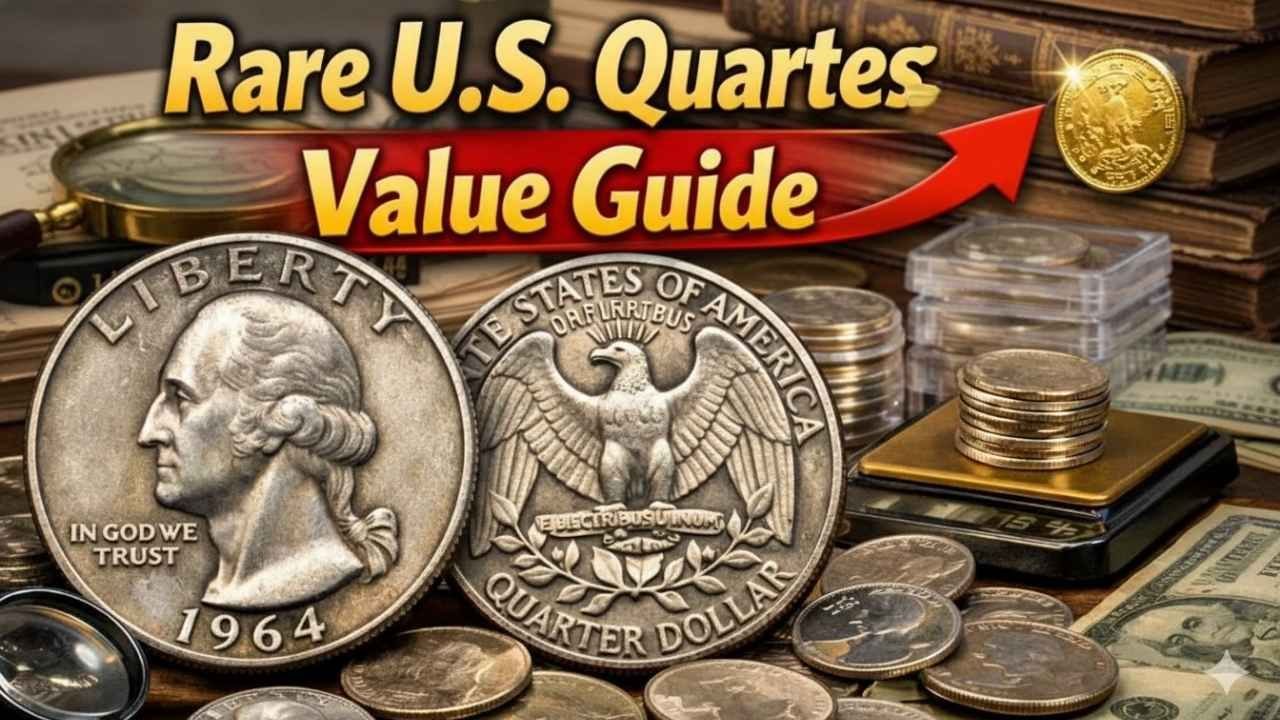
The American quarter is one of the most familiar coins in circulation, yet behind its everyday presence lies a remarkable investment landscape. Since its introduction in 1796, the U.S. quarter has evolved through multiple historic designs, mint locations, and metal compositions. While most examples remain worth face value, certain rare quarters command prices ranging from thousands to well over a million dollars.
For serious collectors and investors, understanding which quarters hold premium value requires knowledge of rarity, condition, historical importance, and minting anomalies.
The Origins of the U.S. Quarter
The quarter dollar debuted in 1796 as part of the early federal coinage system. The first design, known as the Draped Bust Quarter, was struck in extremely limited quantities. Fewer than 7,000 pieces were minted, and far fewer survive today in collectible condition.
High-grade specimens of the 1796 issue have achieved prices approaching $1.7 million, making it one of the most coveted early American coins. Its rarity, combined with its status as a first-year issue, places it firmly among the elite of U.S. numismatics.
What Determines a Quarter’s Value?
Not all old quarters are valuable. The difference between common and extraordinary often comes down to four core factors:
1. Date and Mint Mark
Certain years were produced in smaller numbers. Mint marks—such as D (Denver), S (San Francisco), CC (Carson City), or W (West Point)—can dramatically impact value.
2. Condition (Grade)
Coins preserved in Mint State (uncirculated) condition are exponentially more valuable than worn examples. A single grade difference can mean thousands of dollars.
3. Historical Significance
First-year issues, design transitions, or coins struck during pivotal historical periods carry additional appeal.
4. Mint Errors and Varieties
Misstrikes, doubled dies, and wrong-planchet errors create scarcity within already limited populations.
High-Value U.S. Quarters to Know
Seated Liberty Quarter (1870–1873 CC)
Carson City issues are legendary among collectors due to low mintages and frontier-era history. Seated Liberty quarters from the Carson City Mint routinely exceed $50,000 in higher grades.
Barber Quarter
The 1901-S Barber Quarter is widely regarded as the key date of the Barber series. With a mintage of just over 72,000 and very few surviving in high grade, top examples can exceed $95,000.
Standing Liberty Quarter
Introduced in 1916, this design is celebrated for its artistry. The first-year Type 1 issue had a mintage of roughly 52,000, making it one of the rarest 20th-century quarters. Premium specimens regularly sell for $15,000 or more.
Washington Quarter and Washington Quarter
The Washington Quarter series began in 1932 to commemorate George Washington’s 200th birthday. The Denver (D) and San Francisco (S) issues had especially low mintages and are considered key dates. High-grade examples can exceed $20,000.
Washington Quarter
One of the most fascinating modern errors, this coin was struck on a Canadian planchet. Its unusual composition and extreme rarity have pushed values beyond $35,000.
Washington Quarter and Washington Quarter
In a modern twist, the U.S. Mint released limited quantities of quarters struck at West Point in 2019 and 2020. The 2020 issue featured a special V75 privy mark honoring the 75th anniversary of the end of World War II. Though recent, these coins have already reached values of $500 to $1,000 in high grades.
Error Quarters That Command Premiums
Mint errors introduce rarity into otherwise common years. Collectors actively seek:
Off-Center Strikes
When the coin is misaligned during striking, leaving part of the design missing.
Doubled Die Varieties
Visible doubling in lettering or numbers due to die misalignment.
Wrong Planchet Errors
Coins struck on blanks intended for different denominations or foreign currency.
Clipped Planchets
Coins missing a curved section from improper blank cutting.
High-grade, dramatic examples of these errors can command thousands of dollars.
Silver Quarters: Built-In Intrinsic Value
Quarters minted before 1965 contain 90% silver. While their baseline value is tied to silver content, collectible dates and pristine condition can multiply that worth significantly.
For example, a common pre-1965 quarter might trade near bullion value, but a rare date in Mint State condition can achieve substantial premiums.
The Investment Perspective
Rare quarters occupy a unique niche within alternative assets. They are:
- Portable and tangible
- Historically finite in supply
- Globally recognized
- Supported by an established auction infrastructure
High-profile auction results often reinforce confidence in rare coins as long-term stores of value. Unlike commodities, rare coins cannot be newly mined or recreated, giving scarcity a permanent edge.
How to Identify Valuable Quarters
Serious collectors rely on discipline and careful evaluation. Begin with these steps:
- Examine the date and mint mark under magnification.
- Compare the coin to known key dates and varieties.
- Assess wear, luster, and surface preservation.
- Weigh the coin to confirm composition when necessary.
- Submit significant finds to reputable grading services for authentication.
Professional grading adds credibility, liquidity, and long-term protection for high-value pieces.
The Cultural and Artistic Appeal
Beyond financial potential, quarters reflect the evolving story of America. From early federal artistry to modern commemorative programs, each design captures a different chapter of national identity.
Collectors often build thematic portfolios—focusing on early silver coinage, key dates, or modern mint innovations. This blend of strategy and storytelling makes quarter collecting both intellectually rewarding and financially compelling.
Conclusion
Rare U.S. quarters prove that extraordinary value can hide within everyday currency. From the 1796 Draped Bust to modern West Point issues, select quarters command prices far exceeding their 25-cent denomination.
For investors and collectors alike, success lies in understanding rarity, condition, and historical context. With the right knowledge and patience, a small silver disc can transform into a high-value asset—bridging centuries of American history in the palm of your hand.