Most people handle coins every day without a second thought. Yet within ordinary pocket change, there are rare pieces that have sold for thousands — and in some cases, far more. For collectors and investors alike, everyday coins represent a fascinating blend of history, scarcity, and opportunity.
In 2026, interest in rare U.S. coins continues to grow as tangible assets gain renewed attention. Below are fifteen coins that may look ordinary at first glance but can hold extraordinary value under the right conditions.
1. 1943 Copper Penny
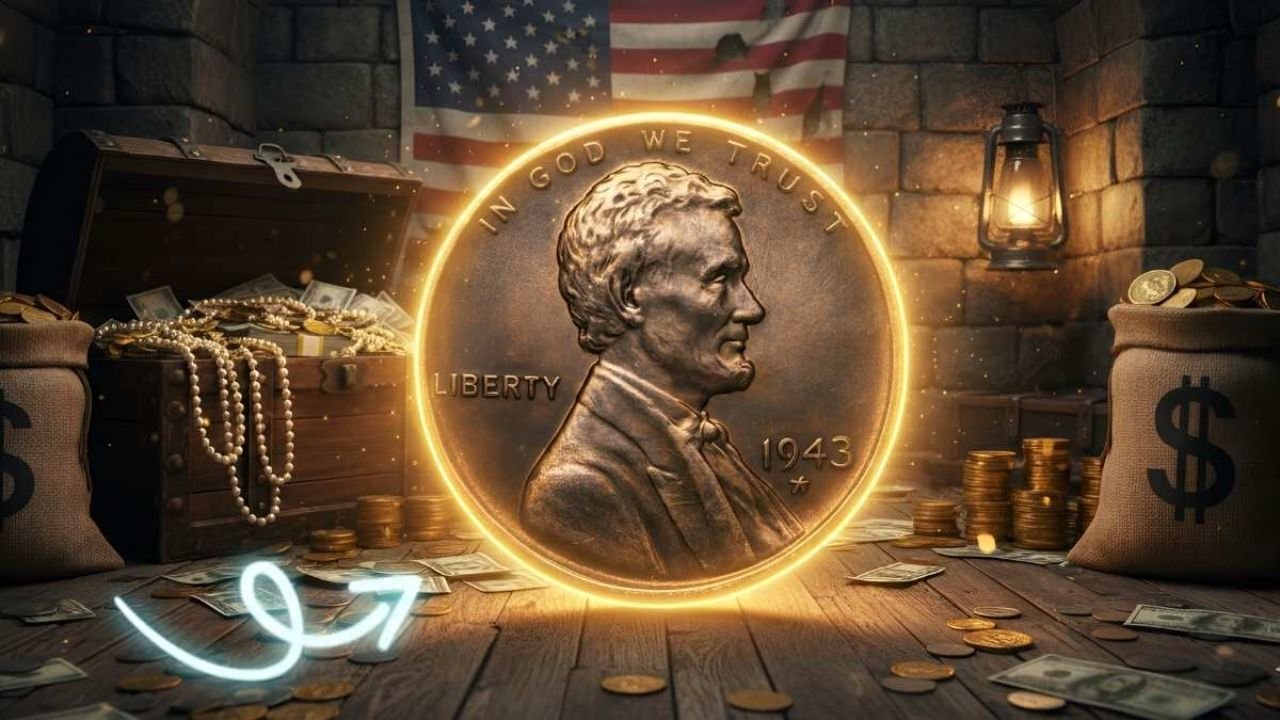
The legendary 1943 Copper Lincoln Penny remains one of the most famous mint errors in American history.
During World War II, pennies were struck in steel to conserve copper for military use. However, a small number of copper planchets were accidentally left in the presses. These rare copper coins have sold for tens of thousands — and exceptional examples have reached six figures at auction.
2. 1955 Doubled Die Penny
The 1955 Doubled Die Lincoln Cent is instantly recognizable due to dramatic doubling in the date and lettering.
Even circulated examples command strong prices, while high-grade specimens are worth several thousand dollars. It remains one of the most accessible “big-name” error coins for serious collectors.
3. 1969-S Doubled Die Penny
The 1969-S Doubled Die Lincoln Cent displays bold doubling on the obverse inscriptions.
Its scarcity and visual impact make it highly desirable. Authenticated examples can reach well into the thousands, especially in superior condition.
4. 1972 Doubled Die Penny
Less rare but still valuable, the 1972 Doubled Die Lincoln Cent features noticeable doubling on the date and lettering.
Well-preserved examples remain in high demand, offering collectors an attainable yet rewarding find.
5. 1982 No Mint Mark Dime
The 1982 No Mint Mark Roosevelt Dime was struck without the expected “P” mintmark.
This production oversight created a recognized modern rarity. In Mint State condition, values can climb into the high hundreds or more.
6. 2004-D Wisconsin Extra Leaf Quarter
Among modern circulation finds, the 2004-D Wisconsin State Quarter stands out.
Two variations exist — High Leaf and Low Leaf — both caused by die anomalies. Premium examples can sell for hundreds or even thousands depending on quality.
7. 1999-P Delaware “Spitting Horse” Quarter
The 1999-P Delaware State Quarter features a die crack that appears as a line extending from the horse’s mouth.
Collectors appreciate the distinctive look of this error, and certified examples consistently outperform face value by a wide margin.
8. 2005 Minnesota Extra Tree Quarter
The 2005-P Minnesota State Quarter displays additional tree-like details due to die doubling.
Multiple die varieties exist, and strong examples with visible doubling are especially collectible.
9. 1970-S Proof Quarter Struck on Silver Planchet
The 1970-S Proof Washington Quarter represents a rare transitional mistake.
A small number were struck on leftover silver planchets, making them highly valuable proof errors. These coins have sold for thousands when authenticated.
10. 1983 Washington Quarter (Mint State)
The 1983 Washington Quarter is common in circulation but surprisingly scarce in high-grade condition.
Because few were saved at the time of issue, pristine examples certified MS65 or higher can command substantial premiums.
11. 1992 Close AM Penny
The 1992 Close AM Lincoln Cent features the letters “A” and “M” in “AMERICA” positioned unusually close together.
This subtle variety has become a prized discovery coin. Sharp, well-preserved examples can reach four-figure values.
12. 1999 Wide AM Penny
In contrast, the 1999 Wide AM Lincoln Cent shows wider spacing between the “A” and “M.”
Though less famous than the 1992 version, it remains scarce and highly collectible in top condition.
13. 2000 Sacagawea Dollar Mule Error
One of the most dramatic modern mint mistakes is the 2000 Sacagawea Dollar Mule Error.
This coin pairs a Sacagawea dollar obverse with a state quarter reverse. Only a small number are known to exist, and examples have sold for significant five-figure sums.
14. 1942–1945 Silver Wartime Nickels
The 1942-1945 Silver Jefferson Nickels were struck with 35% silver to preserve nickel metal during World War II.
While many survive, high-grade uncirculated examples and exceptional eye appeal pieces can be surprisingly valuable.
15. 1964-D Peace Dollar
The mysterious 1964-D Peace Dollar was struck but never officially released into circulation.
Although most were reportedly melted, any surviving examples would be considered among the rarest modern U.S. coins. Their value is often described as virtually priceless within numismatic circles.
Why Everyday Coins Can Be Worth Thousands
The value of these coins is driven by a combination of rarity, condition, historical significance, and collector demand. Mint errors, transitional designs, and low survival rates elevate certain pieces from ordinary currency to investment-grade collectibles.
Professional authentication and grading play a critical role in determining market value. Even minor differences in condition can dramatically affect pricing.
Final Thoughts
The idea that valuable coins might still be hiding in everyday change continues to inspire collectors worldwide. From famous doubled dies to subtle spacing varieties and dramatic mule errors, these fifteen coins demonstrate how overlooked details can translate into significant financial upside.
For those willing to learn the nuances of mintmarks, die varieties, and grading standards, the next extraordinary discovery could be sitting quietly in a jar of spare change.